
IT Band Syndrome Physical Therapy in Winston-Salem, NC
More Than Rest and a Foam Roller
Runners come to us dealing with persistent IT band pain that keeps cutting training short — even after trying rest, stretching, and the usual home remedies. At Elite Movement, you work one-on-one with a Doctor of Physical Therapy to find what's actually driving the problem and build back stronger.

Why IT Band Pain Keeps Coming Back
You Rest, Feel Better, and Flare Up Again on Your Next Long Run
Rest reduces inflammation, but it doesn't fix the hip weakness, mobility deficits, or gait patterns that created the load problem to begin with. Without addressing those, the next mileage buildup brings the pain right back.
You've Tried Foam Rolling and Stretching — and It Helps for a Day
Soft tissue work and stretching can provide temporary relief, but IT band pain is usually a loading and strength issue — not a tightness issue. Treating the symptom without the root cause keeps you in the same cycle of manage, train, and flare.
You Got Discharged Before You Were Ready to Push Again
Standard PT stops at pain relief and sends you home with a home exercise program. There's no return-to-run phase — no confirmation that your hip strength, loading tolerance, and gait are actually ready for real training mileage again.
Rehab That Addresses the Actual Load Problem
At Elite Movement, we don't guess at what's driving your IT band pain — we assess it. Every session is one-on-one with a DPT. Your plan targets the hip strength, loading, and movement deficits specific to you, and follows you through a full return-to-run progression before we call it done.
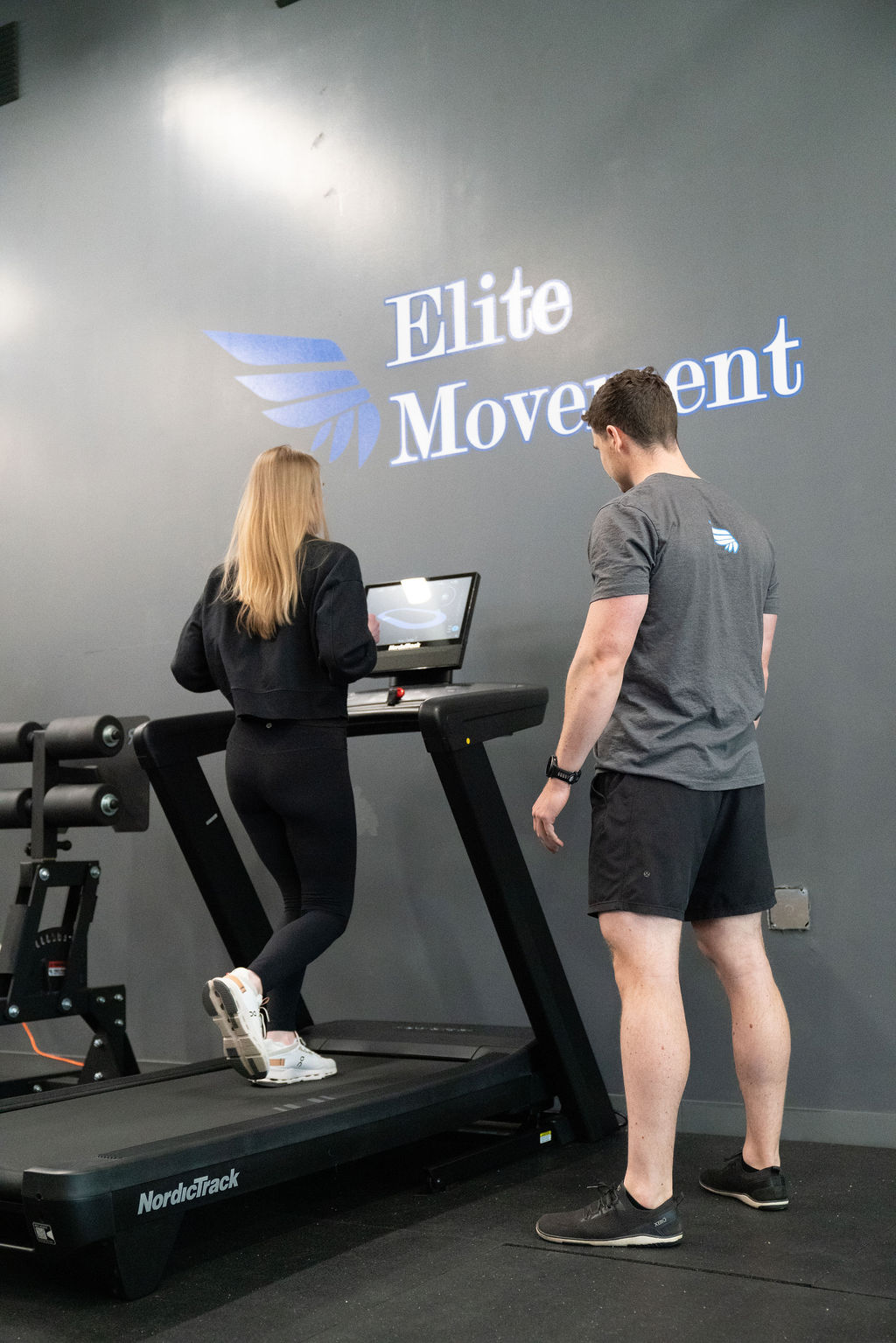


Who We Work With for IT Band Pain
Runners and active adults dealing with lateral knee and hip pain.
Road and Trail Runners — dealing with lateral knee or hip pain that shows up during long runs or mileage buildups and won't resolve with rest alone.
Athletes Returning From a Previous IT Band Flare — who got better once before but are dealing with the same recurring pattern and want to actually fix it this time.
Runners Training for a Race — navigating an IT band flare mid-training cycle and trying to stay on track without making things worse.
Three Steps Back to Full Performance
Step 1 — Consult
Book a free phone consult. Share your goals, tell us what's been getting in the way, and find out if we're the right fit.
Step 2 — Assess and Build Your Plan
Your first appointment includes a thorough performance-based evaluation. Your program is built around your findings — no generic templates.
Step 3 — Reach your goals
Our mission is to help you achieve your goals. Come experience the difference.
What Our Runners and Athletes Say
Hear from runners who got back to training — and stayed there.



Frequently Asked Questions
Here are the most common questions runners and athletes ask before booking their first IT band PT visit at Elite Movement — with direct answers.
For most runners, yes — IT band syndrome responds well to physical therapy when the treatment addresses the real drivers: hip weakness, loading mechanics, and gait patterns. Rest alone rarely solves it because it doesn't fix the underlying problem. A structured rehab plan with progressive return-to-run is what actually gets athletes back to consistent training.
No referral needed. North Carolina allows direct access to physical therapy, so you can book a free phone consult and get started without waiting on a physician's order. Imaging is rarely necessary for IT band syndrome — the diagnosis is clinical, and an MRI typically won't change the treatment approach.
IT band pain recurs because rest resolves inflammation but leaves the underlying weakness and movement patterns intact. When training volume picks back up, the same load problem reappears. Fixing it requires addressing hip strength, mobility deficits, and running mechanics — not just reducing mileage until it feels okay again.
Timeline depends on how long it's been going on, your current hip strength baseline, and how quickly you respond to treatment. Most runners dealing with a recent flare can expect to be back to full training within 6–10 weeks with a structured plan. We give you an honest projection after your initial eval — not a vague estimate.
Dry needling and manual therapy are tools we use when the assessment shows they'll move you forward — not added by default. For IT band cases involving TFL tension, hip external rotator tightness, or restricted soft tissue, dry needling and soft tissue mobilization are often part of the plan. Whether we use them depends on your eval findings, not a standard protocol.
Still have questions?
Reach out — we'll help you figure out if IT band PT is the right next step.
Done Managing IT Band Pain Between Runs?
Book a free phone consult and find out what it actually takes to fix the root cause — so you can get back to training without watching your mileage in the rearview.
